The Flu, version D.
A subtle delivery system for a much larger threat.

“Nobody’s Testing For It.”
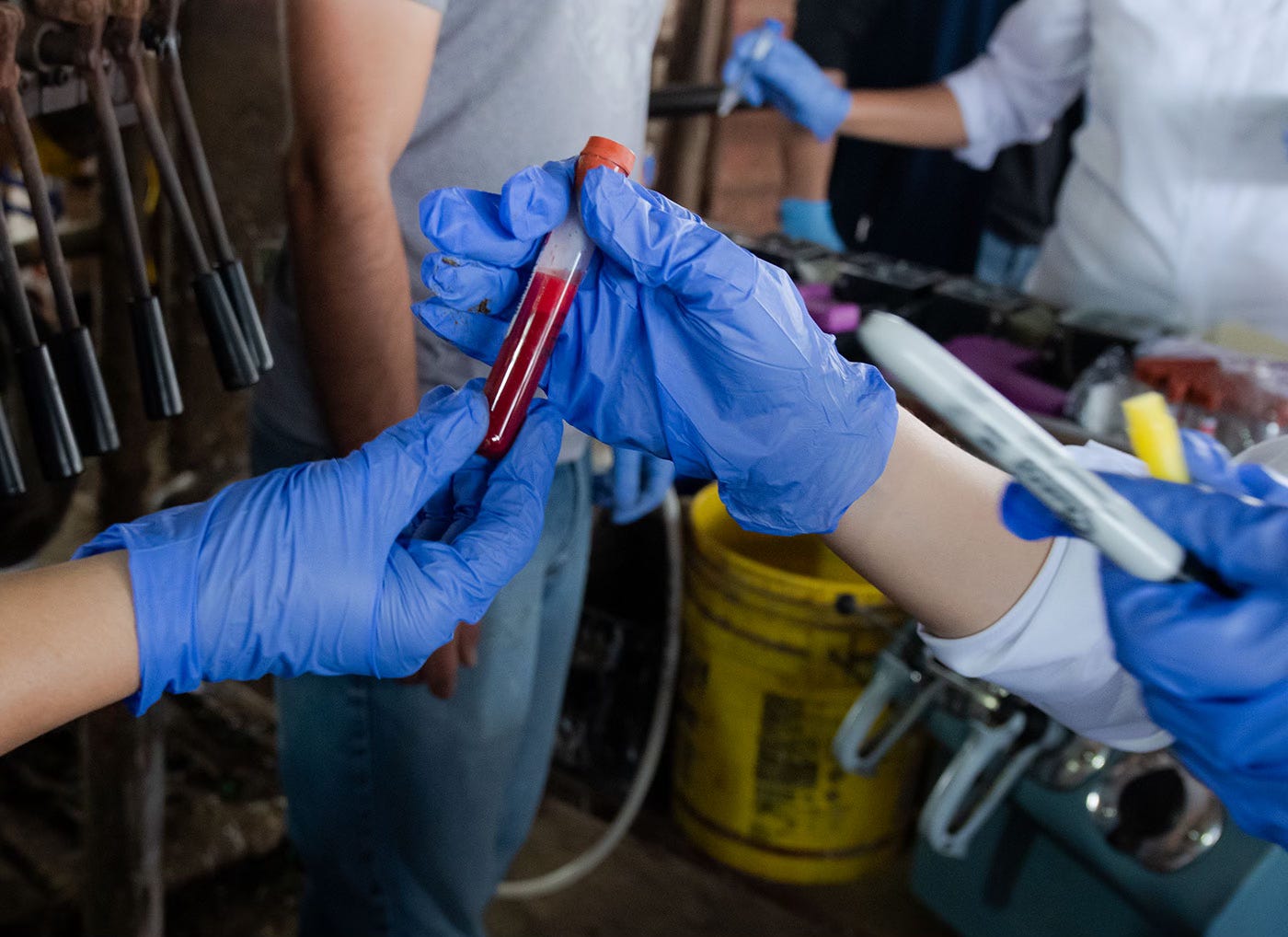
Nuevo León state in Mexico—At dawn one morning in December 2025, researchers in the sprawling city of Monterrey, Mexico, loaded a large passenger van with syringes, swabs, test tubes, air samplers, and coolers. They then drove through the flat countryside for 2 hours, leaving the gap-toothed Sierra Madre Oriental mountains in the distance, until they reached a feed lot that had 24,000 head of cattle. “Everywhere you look, all the way to the horizon, it’s cows,” said Gregory Gray, an infectious disease clinician and epidemiologist from the University of Texas Medical Branch.
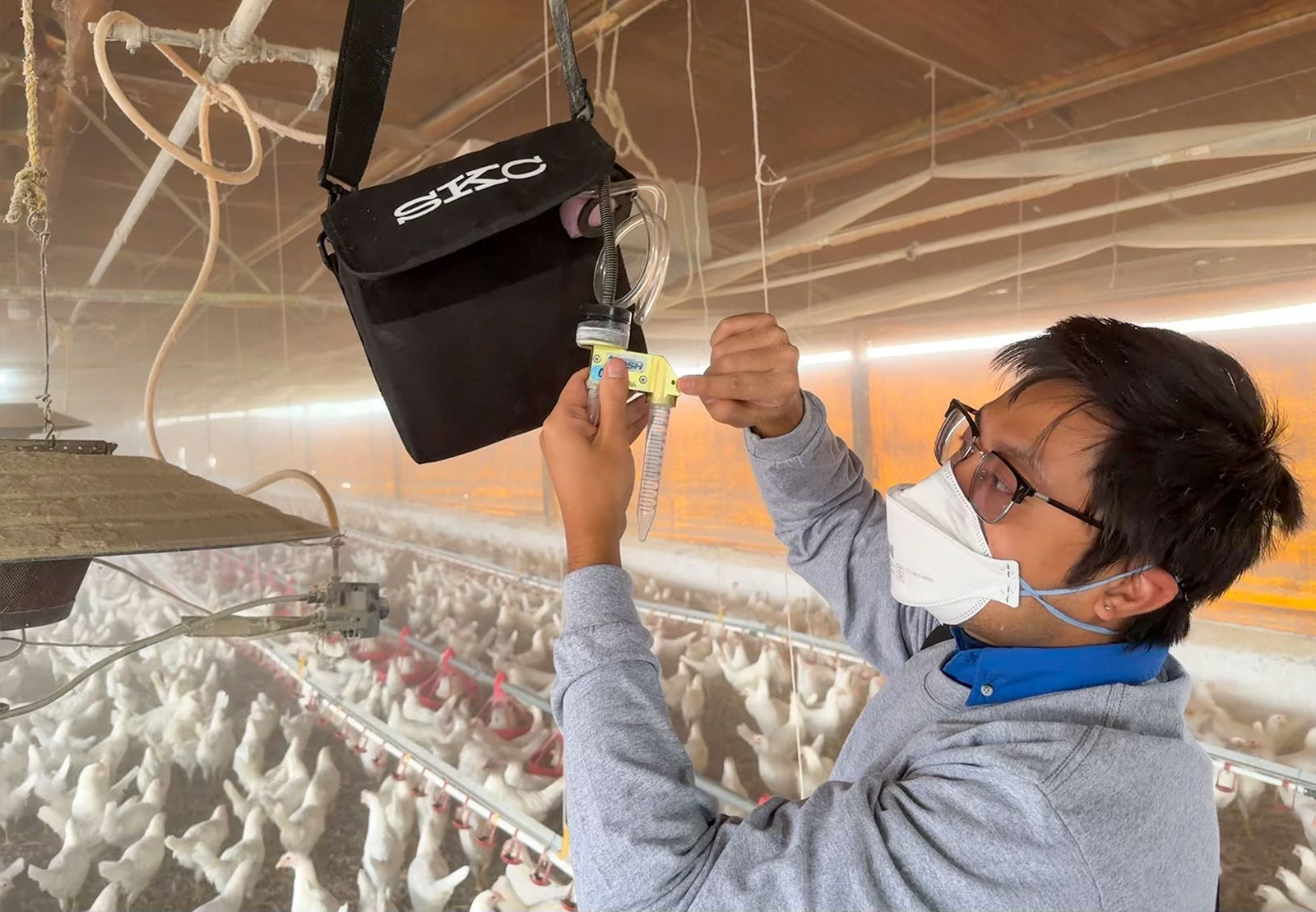
At the farm, the team began swabbing noses and taking blood samples from the animals. Gustavo Hernández-Vidal, a veterinarian at the Autonomous University of Nuevo León, walked with Thang Nguyen-Tien, a virologist in Gray’s lab, to a long pen that held about 100 sick cattle. From a rafter, Nguyen-Tien hung a bioaerosol sampler that sucks in air and spins it to separate particles and collect viral genetic material. Curious, the farm’s head veterinarian asked what they were doing.
“We want to see what the cows are breathing,” Hernández-Vidal said.
“The cows and us,” the vet replied.
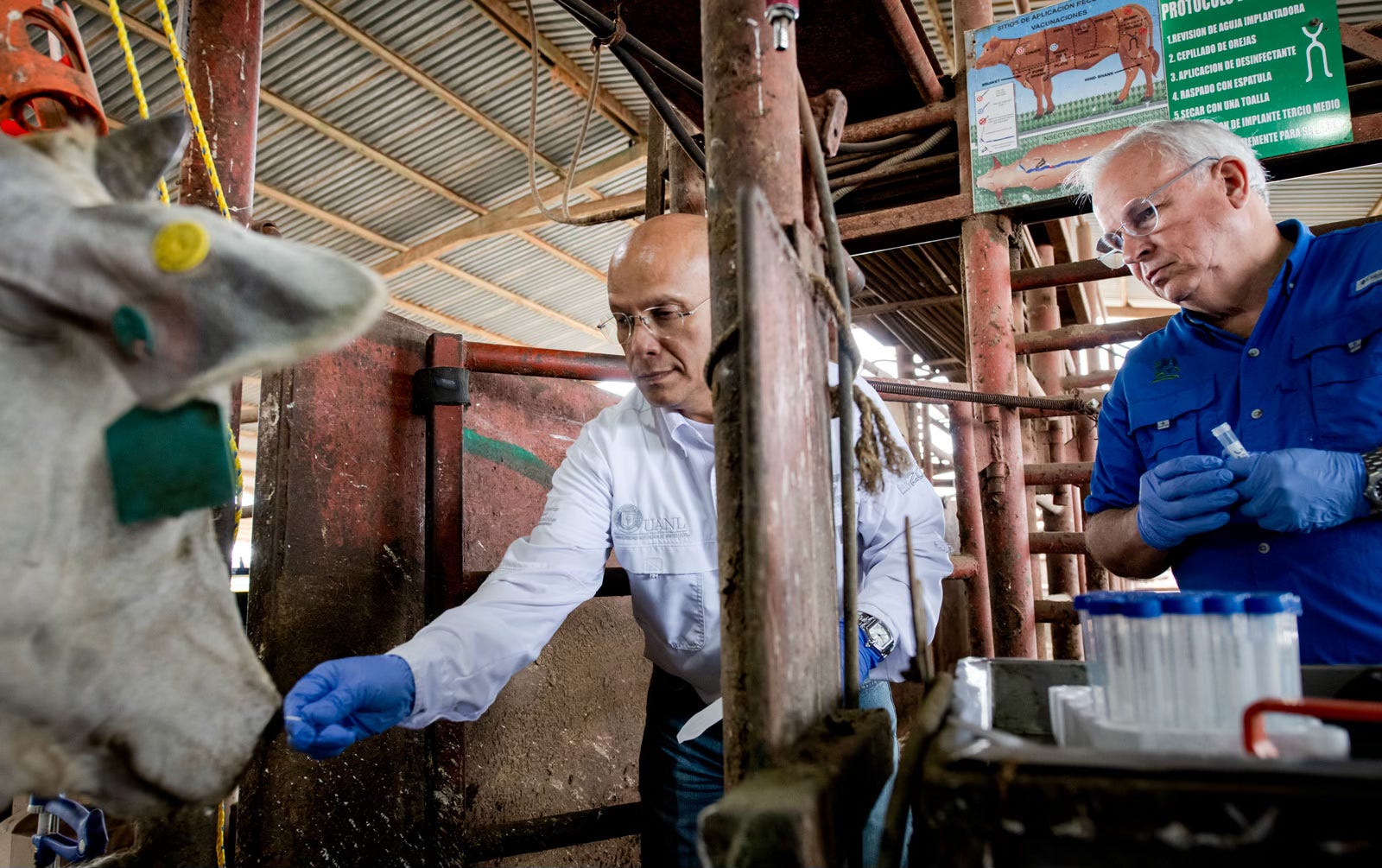
The team was here to study influenza D, a mysterious and unsettling new member of the family of flu viruses. They wanted to better understand where and how it spreads—and whether it could become a threat to humans.
Of the four known types of influenza, A is humanity’s biggest problem. Spreading easily through the air, it causes annual epidemics that kill tens of thousands. It also infects many other animal species, and different strains of A can swap genetic material to create “reassortants” that are new to our immune systems and trigger pandemics. An influenza A subtype known as H5N1 has been devastating poultry and wild bird populations for the past 30 years and is widely feared to have pandemic potential.
Influenza D virus, known in shorthand as IDV or flu D, has several of the worrisome features of influenza A: It occurs around the world, infects multiple species, and is fond of reassorting. “It is demonstrating all the hallmarks of an emerging pathogen for both animals and humans,” says virologist Suresh Kuchipudi, who studies IDV at the University of Pittsburgh.
But humans may become infected by IDV as well. Several studies, including one the U.S.-Mexican team carried out earlier at the same feed lot, have found antibodies to the virus in farm workers, indicating they were exposed to it. There is no evidence yet they fell ill, but IDV could evolve to more readily infect and sicken people, says Gray, who has helped discover a half-dozen viruses in humans and animals. “We need to be ready to respond,” he says. “What appears today as a quiet livestock virus could, with little warning, ignite the next influenza pandemic,” Ohio State University (OSU) veterinarian Cody Warren and co-authors warned in an 8 February preprint that showed flu D readily infects cells found in human airways.
Researchers soon began to find flu D at cattle farms all over North America, Europe, Asia, Africa, and Australia. A study of Swedish dairy farms found IDV antibodies in bulk milk. Gray’s team has also found the virus in aerosol samples from poultry farms in Malaysia. Antibodies to flu D have turned up in sheep, goats, camels, deer, horses, wild boars, cats, and dogs, as well.
That wide range of species is worrisome. It opens the way for two viral variants adapted to different species to coinfect the same animal and reassort, creating progeny that is better at dodging existing immunity in the human population. The H1N1 strain that caused the 2009 pandemic, for example, combined gene segments from flu A viruses in swine, birds, and humans.
Two days of work at the Mexican farms yielded 155 samples that were flown to Gray’s lab in Texas. Researchers found IDV in nasal samples from six sick and eight apparently healthy cattle—35% of the cattle sampled. One cow had an influenza C infection. The researchers plan to screen the samples for other novel viruses that might harm humans or livestock, including a new coronavirus that Gray and Hernández-Vidal discovered in sick cows on this farm in 2024.
Looking up at large flocks of barn swallows wheeling around the corrals and perching on rafters and gates, Hernández-Vidal wondered whether they might move influenza D from place to place, which routinely happens with A. “That would be a very big deal,” he said.
“Nobody’s testing for it,” Gray added
A version of this story appeared in Science, Vol 391, Issue 6787.
There is more of this article available in the link provided above. Needless to say, Flu D spreading a re-assorted version of H5N1 distributed by flocks of swallows infected through their natural mingling with livestock presents a very, VERY serious human problem.
My Own Personal Tin Foil Hat
I know, I know. To some degree these posts that go on and on about H5N1 and vaccine unpreparedness and re-assortment and gain-of-function testing all get to be somewhat trite after a time. A timeframe that humans tend to forget things over. A few laps around the sun? Six? Like my son says, “three, four, five, three, four, FIVE.”
The actual reason I post all of this stuff is that it is grist for the mill, information I come across while reading for research, and where genetics and virology meet is of significant importance for False Ignition. So no I’m not actually wearing a tinfoil hat, but in order to get inside the heads of characters in fictional worlds, it’s a good place to write from.
How to Promote The Sequence
The other day while at work and having incurred a lengthy delay (in Punta Cana) I was speaking to the passengers using the phone at the entry door explaining the reasons we were delayed. I also explained why I was signing a book for the First Officer in the forward galley (that I had written it). Then pretty much every passenger in the first three rows asked about the book, took photos of the cover, looked up the reviews and ultimately (so they claim) bought the book! Even as I said thank you while they deplaned, even more said they were buying the book. Not a terrible way to promote although this was a one off, and I wouldn’t make a habit of it without discussing it with my superiors, if I could get direct exposure like this every day I worked The Sequence would definitely find a greater audience!
Taken
Here’s the 250 Word NYC Midnight 1st round submission titled, Taken. There’s obviously room for improvement and I do have edits ongoing on this short piece but this is the raw, 48 hour writing contest version that landed me a spot in round two.

TAKEN by Lucien Telford
On the seventh night, she wrote TAKEN on the pill bottle in thick black Sharpie, shook out the last blue octagon then slammed it down her throat and swallowed.
Not possible.
Worsening anxiety had become clinical paranoia. She lay back on the lab’s single cot, its rusty springs squeaking, scouting for movement.
Her doctoral thesis; what happens to synthetic organoids of human cellular origin when they die? A petri-dish of neurons that could navigate a maze when connected by electrodes should not experience an afterlife. And yet, that transformational space between death and whatever–came–next had shown itself as a measurable entity, and one worth studying.
The work consumed her. Exploring a tangible afterlife kept her in the lab night and day. When the cot’s disruptive creaks interrupted her sleep she’d bought a sound machine and in the machine’s generated hiss she’d heard the first whispers. Recorded them, replayed them. Disembodied voices of deceased collections of neurons.
“Not possible,” she said to the lab.
Possible, replied the static.
She killed the lights, tasting the octagon’s first hints of chemically induced sleep.
Not home
Flicked the lights on, caught movement. A shadow flitting beneath her bench.
Not your home
The lights failed. Shadows coalesced becoming fingers of chilled darkness, groping at her exposed skin, an amorphous coagulation of previously living tissue. The shadows spread, wanting, enshrouding her body, mapping her nervous system, beating her heart, blinking for her, tongues of ice crawling across her skin.
Want home
Thinking for her.